
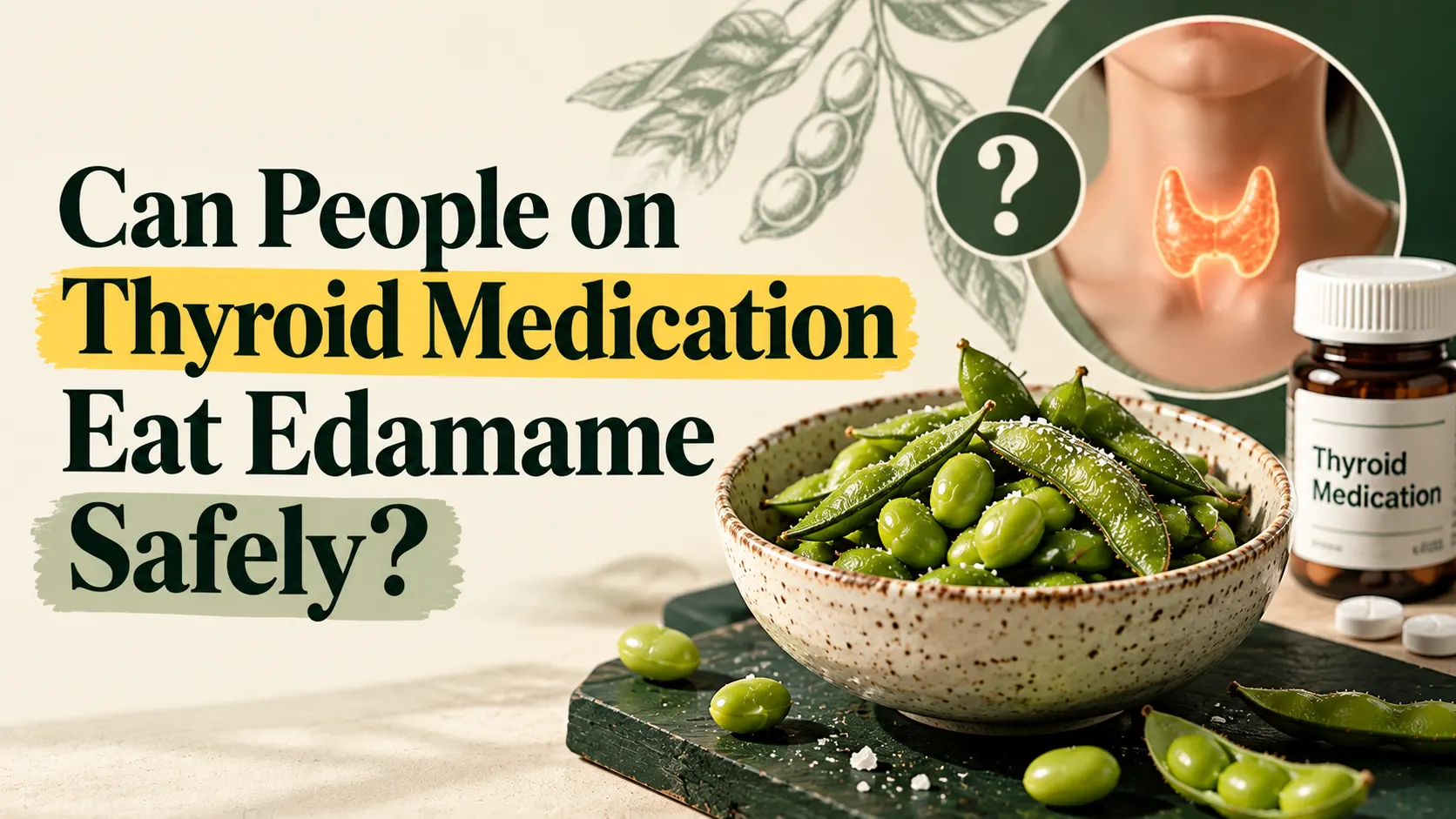
Edmame is young, immature soybeans – harvested, then boiled, steamed, or roasted and eaten as a snack or side dish, as shown in the picture. It’s known for being one of the few plant foods with complete protein, along with a solid dose of fiber, folate, and minerals like iron and magnesium. (If you want the full nutrition breakdown, that’s covered in our earlier post on daily edamame intake.)
Because it’s a soy food, though, edamame falls into a small category of foods that specifically interact with thyroid medication – which is exactly what the post is about.
Thyroid medications like levothyroxine work by replacing the hormone your thyroid isn’t producing enough of on its own. For it to work properly, your body needs to absorb it efficiently in the small intestines – and this is where soy becomes relevant.
Soy contains compounds that can bind to levothyroxine in the digestive tract, which lowers how much of the medication is actually available for your body to absorb. This isn’t unique to edamame – it applies to tofu, soy milk, tempeh, miso and other soy products too. The effect has been most clearly documented in infants on soy-based formula, but doctors, including endocrinologist at institutions like Mayo Clinic, advise the same question for adults as a safety margin.
Importantly, this is an absorption issue, not a toxicity issue. Soy isn’t harming your thyroid directly – it’s just competing for absorption at the same time, in the same place, in your gut.
Recommendations vary slightly depending on the source but they land on a similar range:
A simple way to plan your day: take your medication first thing in the morning, have a soy-free breakfast, and save your edamame snack for a few hours later – lunch, a mid-afternoon snack, or dinner all work well.
No – and this is a common misunderstanding. Doctors are consistent on this point: soy doesn’t not need to be eliminated from your diet if you’re on thyroid medication. The concern is purely about timing, not about soy being unsafe for thyroid patients in general.
In fact, completely cutting out a nutrient-dense food like edamame isn’t necessary and may mean missing out on a genuinely useful source of plant protein and fibre. The goal isn’t avoidance – it’s spacing it out properly.
For most adults on a stable thyroid medication dose, spacing soy foods a few hours apart is enough – no elimination required.
A few practical patterns that work well:
Not directly. Soy doesn’t worsen the underlying condition – it can temporarily reduce how much of your medication gets absorbed if eaten too close to your dose, which indirectly affects how well your levels are managed.
No – the interaction is with the soy protein itself, not the preparation method. Boiled, steamed, or roasted edamame – peri-peri, tangy, cheesy-garlic, or otherwise – all carry the same timing consideration.
The main sign would be TSH levels that don’t stabilise as expected despite consistent dosing. This is something your doctor tracks through routine blood work – it’s not something you’d typically feel day to day.
Yes, as long as you’re maintaining the gap after your dose. Many people on stable thyroid medication eat soy foods, including edamame, regularly without issue.
This article is for general information only and isn’t a substitute for medical advice. If you’re on thyroid medication, especially if your dosage has recently changed or your levels have been unstable, check with your doctor or endocrinologist about how soy fits into your specific treatment plan.
Once the timing is sorted, edamame remains one of the easier ways to snack on something with real protein and crunch built in – roasted, seasoned versions included – without it working against anything else you’re managing
