
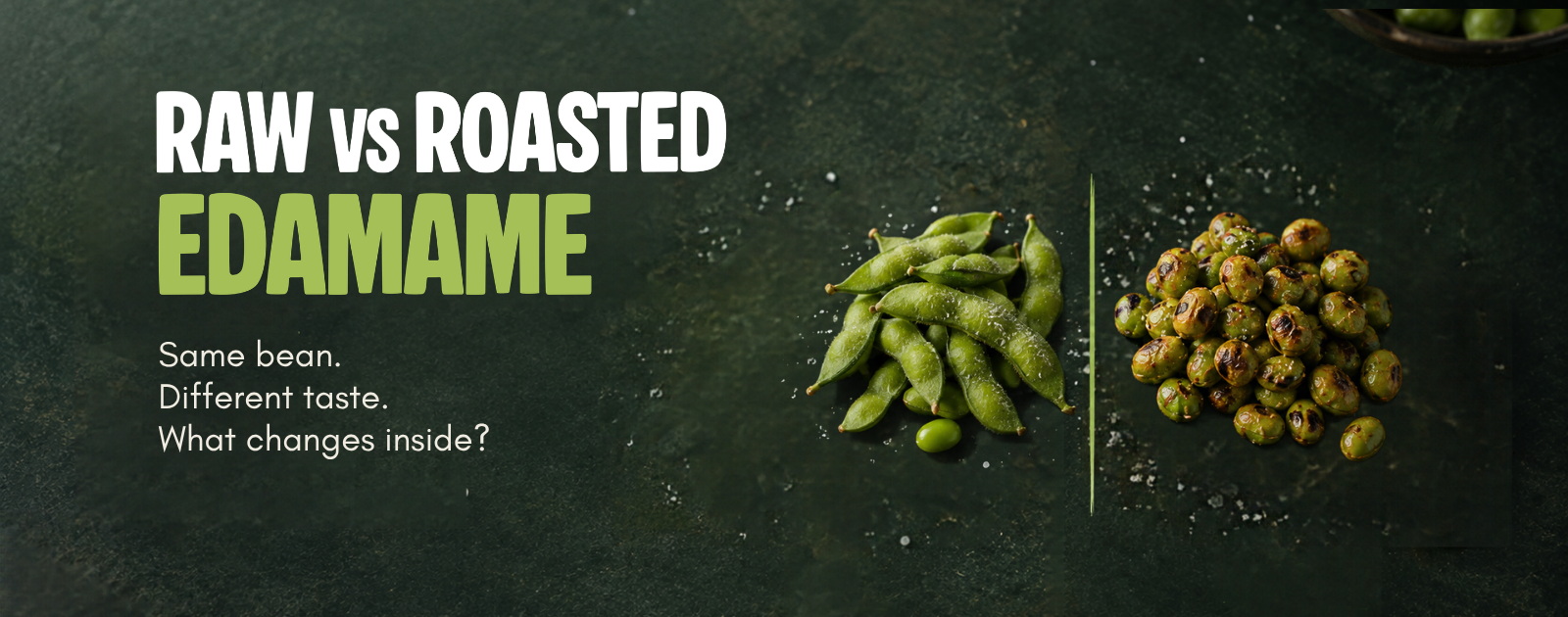
“Roasted” sound like “processed”, and “processed” sounds like “nutrients lost”. It’s an understandable leap, and it’s partly true for some foods: vitamin C is in fresh fruit, for example, does fall with cooking. But protein behaves differently, its building blocks, amino acids, are fairly heat-stable with a normal cooking ranges, and in soy the heat actually removes something that gets in the way. The nutrients that are genuinely heat-sensitive are also not the main reason people eat edamame.
Raw soybeans contain trypsin inhibitors, which interfere with the enzymes your body uses to break protein down, and phytic acid, which can bind to protein and reduce how much you absorb. Heat inactivates most of the trypsin inhibited inhibitors. In one study, eating soybeans raised in vitro protein digestibility by an average of about 33%, and digestibility tracked closely with low much trypsin inhibitor was left. A 2025 study testing temperatures from 60°C to 121°C found that heating at 100°C significantly improved digestibility and cut trypsin inhibited inhibitor levels.
In other words, cooking soy doesn’t destroy its protein value. It unlocks it. Roasted edamame is likely more digestible than the raw been. Roasting also drives off water, so a handful of roasted edamame carries more protein per grams than the same weight of boiled pod. That’s a simple concentration effect, not extra protein.
Heating doesn’t erase every trace of these compounds. One study noted some trypsin inhibitor activity reappearing during digestion. But the net effect on digestibility is strongly positive, which is why cooked soy is a well-established protein source. It also matters that digestibility, not just the protein number on a label, decides how much of that protein your body actually uses. Two snacks can list the same grams of protein and deliver different amount of usable protein.
Raw soybeans also contain haemagglutinins, plant proteins that heat denatures, alongside the trypsin inhibitors mentioned above. Together these are the reasons edamame is always sold and eaten cooked, whether boiled, steamed or roasted. Roasting isn’t a shortcut that compromises the bean. It’s one of several ways of doing the step that makes edamame worth eating in the first place.
There is a ceiling. Excessive or prolonged heat can degrade some amino acids, especially lysine, which is prone to the Maillard reaction, the browning reaction between amino acids and sugars. University of Illinois researchers testing soya bean meal found that moist heat at 125°C for 15 minutes lowered lysine digestibility, and 30 minutes lowered the digestibility of all amino acids. Oven-drying, by contrast, didn’t damage amino acids, because the Maillard reaction needs moisture. A review of soy processing likewise concludes that brief heating below about 100°C generally preserves nutritional value, while excessive heating can degrade the lysine, tryptophan and methionine.
Two practical takeaways. Controlled dry roasting seats at the gentle end of the range, while very dark, scorched edamame is a sign of over processing. And a caveat: most of this research was done on soybean meal and mature soybeans, and commercial roasting conditions vary, so treat it as a guide rather than a guarantee.
Roasting doesn’t destroy edamame protein, and at moderate temperature it improves how well you can use it. The real risks are the extremes very high heat, very long roasting, or deep-frying. Choose gently roasted, minimally processed versions and keep and you keep the protein, fiber, minerals and most of the isoflavones.
No. Add moderate temperatures, heat inactivates compounds that block protein digestion, So the protein becomes easier to absorb. Only excessive, prolonged heat damages amino acids like lysine.
Per gram, yes, because roasting removes water. Per serving cooked from the same amount of raw beans, the protein is essentially the same.
Only under harsh conditions. Very high heat for a long time can reduce total isoflavones by around a quarter, while milder roasting keeps most of them
The article is for general information and isn’t a substitute for personalized nutrition or medical advice.
Done gently, roasting turns edamame from a side dish into a crunchy, protein-rich snack. That’s a big part of why roasted, seasoned versions have become such a popular way to snack.
